Delivery turnaround: Led a five-person SWAT team across the UK and Netherlands to stabilise a failing programme, defining a back-to-green plan and securing stakeholder approval within two weeks, targeting ~30% cost reduction.Service transformation: Defined a target operating model and four-year transformation roadmap delivering ~£4m OpEx savings with zero CapEx, aligning stakeholders around a viable and deliverable path forward.Operating model design: Shaped a Shared Application Services model securing cross-supplier and ExCo alignment, enabling a 10-year shift from ~10% to ~80% in-house service ownership.
“He combines a professional, can-do attitude with highly impressive technical knowledge, excellent business acumen, and unwavering customer focus.”
Most organisations don’t struggle because they lack frameworks
They struggle because delivery, service, and governance don’t work together in practice.
Delivery slips, service degrades, and governance adds friction rather than clarity. Confidence drops, decisions slow down, and cost and performance come under pressure.
My focus is on bringing these back into alignment — so delivery regains control, service performs as expected, and governance supports progress rather than slowing it down.
This isn’t about introducing another framework. It’s about making what you already have work together in practice.
I use a structured approach to do that — bringing clarity across delivery, service, and governance from inception through to operation.
Delivery off track or losing control
Support and maintenance disconnected from product delivery
Supplier and team interfaces creating friction and delay
Leadership lacking visibility, grip, or confidence
Operating models no longer aligned to business need
I am typically brought in when:
Delivery is slipping and confidence is dropping
Service performance is unstable or under scrutiny
Run and Change are disconnected
Leadership needs clarity on what is really happening
What I do
Three ways I typically help
I stabilise delivery, strengthen live service, and redesign operating models where control, confidence, and performance are under pressure.
Most engagements start with delivery recovery and extend into service and operating model change as needed.
01Delivery Turnaround
Stabilising complex programmes where delivery has drifted, re-establishing control across cost, schedule, and outcomes to protect investment and restore confidence.
Governance reset, stakeholder alignment, and delivery visibility, combined with pragmatic recovery planning and commercially viable execution that brings programmes back onto a credible trajectory.
I am typically brought in when:
Delivery is slipping and confidence is dropping
Leadership needs clarity on what is really happening
Transforming live service environments to improve performance, resilience, and user experience, while reducing operational risk and total cost of ownership.
Integrating Run and Change through ITIL-aligned service improvement, transition, and performance management, ensuring services are scalable, measurable, and aligned to business outcomes.
I am typically brought in when:
Service performance is unstable or under scrutiny
Transition into live is high-risk or under pressure
Aligning Agile, ITIL, and DevOps into a practical operating model that enables consistent delivery, service performance, and governance across complex organisations.
Organisation design, role clarity, governance, automation, and integrated delivery-and-service ways of working that improve efficiency, reduce friction, and support sustainable, outcome-driven execution.
I am typically brought in when:
Operating models no longer support delivery in practice
Teams, suppliers, and governance are working at cross-purposes
Leadership needs a model that will hold under pressure
Real outcomes, delivered in complex, high-pressure environments
2 weeksTime taken to define and secure approval for a back-to-green SAP service transformation plan for Siemens
~30%Cost reduction targeted through near-shore service delivery model for Siemens’ SAP implementation
£4mOperational cost savings attainable through a 4-year application transformation roadmap at the BBC
Zero CapExCapital expenditure required to fund the BBC application transformation and modernisation programme
10% → 80%Increase in Home Office in-sourcing underpinned by the Shared Application Services operating model
10 yearsTime-horizon of the transformation programme to realise the Home Office Shared Application Services model target state
60%Process efficiency uplift delivered through intelligent automation adoption
£7.6MRevenue protected by decisive intervention in a high-risk product exit and transition
£21MCapability protected through a zero-disruption supplier-to-supplier transition
Case studies
Selected case studies
Examples of recovering delivery, reshaping services, and defining operating models where complexity and pressure are real.
Each reflects a different challenge — from failing delivery to long-term transformation — and how it was brought back under control.
Delivery Turnaround
TOPAS programme delivery turnaround across North West Europe (SAP estate)
Problem: Siemens’ SAP Application Management model in North West Europe had drifted away from its approved operating model, missing cost and quality targets.
Action: Stabilised a failing programme by leading a five-person “SWAT team” to define a back-to-green transformation plan centred on near-shore delivery, lean ITIL processes, and standard tooling.
Outcome: Secured stakeholder approval within two weeks, with a model targeted to achieve ~30% cost reduction.
Target operating model and transformation roadmap for 100+ application estate
Problem: The BBC needed to improve ROI across a complex, multi-supplier application estate while reducing duplication, standardising platforms, and mitigating obsolescence risk.
Action: Defined a target operating model and led a multi-disciplinary team to build a four-year roadmap using a transformational scorecard for high-risk, low-fit applications and a funding model tied to operational savings.
Outcome: Delivered with no capital expenditure, generating ~£4m in operational cost savings while aligning stakeholders around a viable and deliverable path forward.
Shared Application Services model enabling large-scale in-sourcing
Problem: The Home Office needed a future operating model for Shared Application Services across a supplier landscape split between digital and legacy ITO approaches.
Action: Acted as a trusted advisor within the supplier “Rainbow Team”, shaping a Shared Application Services model around squad-based delivery, blended practices, and integrated toolchains.
Outcome: Secured cross-supplier and ExCo alignment, enabling detailed design and transition and underpinning a 10-year transformation programme that increased in-house service ownership from ~10% to ~80%.
Problem: A high-risk supplier transition (BJSS → Mastek) across a critical integration layer threatened knowledge loss, delivery disruption, and downstream impact on dependent services.
Action: Coached, assured, and governed the transition, introducing checkpoints, readiness criteria, and a Microsoft 365-based Service Transition Accelerator.
Outcome: Delivered with no material disruption, protecting a £21M capability while improving risk visibility, onboarding speed, and delivery confidence.
How delivery, service, and governance come together in practice
This isn’t something you adopt. It’s how I make what you already have work together under real delivery pressure.
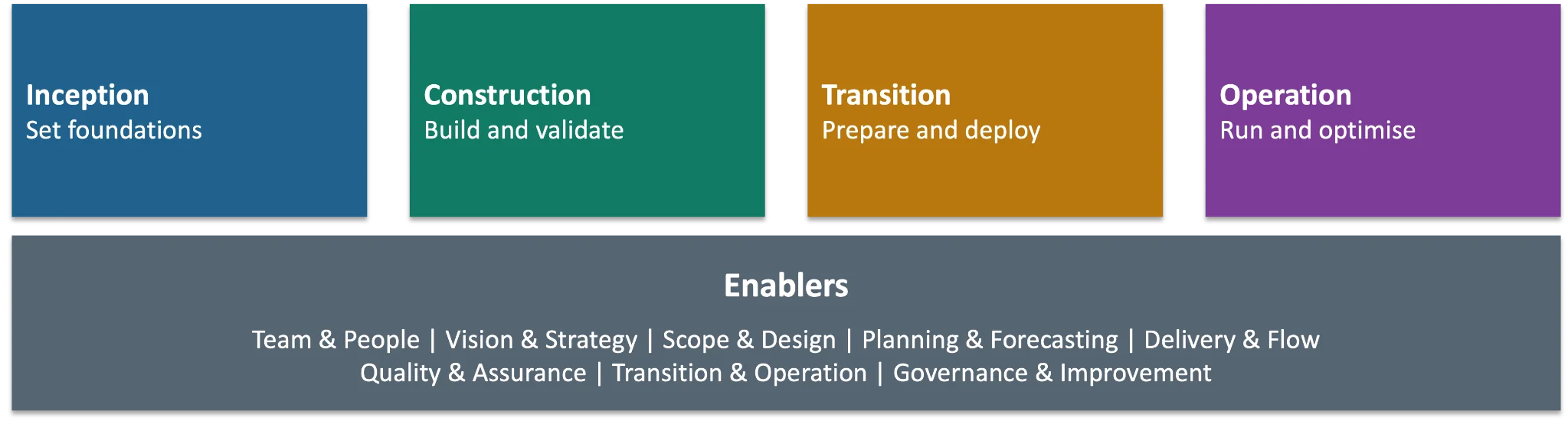
From stabilising failing delivery through to embedding sustainable service and governance, ABBOT brings structure without adding unnecessary overhead.
It spans inception and recovery, through build and transition, into live service and continual improvement.
•Executive-ready governance and decision structures
•Integrated delivery, transition, and live-service thinking
•Practical alignment between business, development, and operations
In practice, this means I can step into a live situation quickly, understand what is really happening, and start making it better without slowing things down.
“Lleyam is consistently perceived as one of the highest performers in his community, trusted for his advice and known to deliver all that we could expect from him, and usually more.”
I’m a Digital Delivery and Service Management professional with 20+ years’ experience leading delivery, service operations, transition, and transformation across complex, regulated environments.
My career has first been built on digital delivery and managed services across complex application and service environments. It also spans organisational change, transition, and operational leadership, giving me the grounding to help clients move from instability to control. Around that core, I have shaped value propositions and supported deal architecture, which means I understand not only how services run, but how they are positioned, governed, and funded.
I have worked in-house, with large outsourcers, systems integrators, and SMEs, and I’m most useful where strategic thinking, commercial awareness, and hands-on execution all need to come together.
I’m typically brought in when services need to perform better, delivery needs to regain control, or a client needs a credible advisor who can think strategically, shape the narrative, and execute practically.
Where I operate
Where I typically operate:
Central Government and public sector
Regulated and complex environments
Multi-supplier delivery ecosystems
Business-critical digital platforms
Perspectives
Selected writing and thought leadership
Short, practical perspectives on digital delivery, service management, and operating model design — based on real delivery experience.
The first weeks of a delivery recovery and what actually matters
Most recovery plans fail in the first couple of weeks because they try to fix everything at once. Replanners show control, but early on the problem isn't the plan — it's that nobody really has control. This sets out a 20-day recovery window: stabilise first, surface the real constraints, and only then replan based on what can actually be delivered.
Why “Wagile” breaks delivery — and how to make it work
Most delivery environments aren’t purely Agile or Waterfall — they’re a hybrid that creates friction, slows decisions, and erodes confidence. This explores why “wagile” fails in practice, and what actually works to bring delivery, governance, and service back into alignment.
Large-scale transformation sounds decisive, but it often creates more delivery risk than value. This looks at why smaller, better-governed change usually lands better in complex environments.
IT service management isn’t broken — it’s just not applied properly
ITIL and service management frameworks are not the real problem. The issue is how they are applied alongside Agile, DevOps, and real delivery pressures in practice.
Why application transformation needs a commercial lens
Transformation decisions are rarely just technical. This explores how to balance cost, risk, service quality, and landscape change without losing sight of commercial reality.
Pay-per-use commercial models do not just change how services are bought. They reshape accountability, delivery expectations, and the operating assumptions behind classic outsourcing.
A more personal perspective on DEIB, leadership, and the story behind My Story; My Glory — and why belonging still matters in delivery environments under pressure.
I tend to be most useful where there is complexity, pressure, and a need to restore control quickly.
ABBOT lifecycle diagram
Delivery Turnaround
Siemens TOPAS NWE Transformation
A rapid recovery engagement to diagnose why Siemens’ North West Europe SAP Application Management model had drifted off target and to define a practical “back to green” transformation plan.
RoleTransformation lead / recovery lead
EnvironmentPan-European SAP application management
FocusBack-to-green transformation plan
Speed to decisionApproved in two weeks
Financial impact~30% cost reduction target
Delivery shiftNear-shore Poland delivery model
Context
Under Siemens IT Solutions and Services’ TOPAS contract, SAP Application Management services for Siemens AG in North West Europe were missing cost reduction and quality targets because the live delivery model no longer conformed to the approved Target Operating Model.
The challenge
The agreed model assumed significant near-shore delivery, but operations remained heavily near-site and on-shore. Leadership needed a credible route to restore cost control, satisfy quality expectations, and unblock concerns about near-shore delivery without disappearing into a long consultancy cycle.
What I did
I led a five-person “SWAT team” across the UK and Netherlands to analyse the as-is Netherlands-based delivery model, define the to-be Poland-based near-shore model, and shape the TOPAS NWE Transformation Project. The solution combined Global Delivery Centre labour arbitrage, lean ITIL-based processes, and migration to standard tooling, while securing buy-in from regional leadership, local operational managers, and near-shore delivery management.
Outcome
Within two weeks, I delivered a transformation plan that won stakeholder backing for incremental transition to near-shore Poland-based delivery. On implementation, the model was targeted to achieve ~30% cost reduction against baseline while complying with quality and legal requirements.
Why it mattered
Recovered control of a service that was off-model and off-target.
Balanced cost take-out with service quality and compliance.
Turned a failing position into a practical, approved recovery programme.
Service Transformation
BBC Project Stratus
A structured application transformation strategy for the BBC, designed to improve ROI across a complex multi-supplier estate while rationalising and modernising it with no new capital expenditure.
RoleSolution Manager / transformation lead
EnvironmentComplex broadcast and enterprise application estate
FocusApplication transformation roadmap
Investment modelNo capital expenditure
Savings achieved~£4m operational cost savings
Transformation horizonFour-year roadmap
Context
The BBC application landscape comprised a mix of custom, line-of-business, and enterprise systems with numerous integration interfaces and multiple third-party suppliers. The organisation needed better ROI, platform standardisation, technology rationalisation, and a way to reduce the risk of application obsolescence.
The challenge
The BBC needed a transformation path that was commercially credible as well as technically sound. Any proposal had to modernise and simplify the estate without relying on a large upfront investment.
What I did
As Solution Manager, Global Application Management for Siemens IT Solutions and Services, I led a team of 15 across the UK and India. I used a transformational scorecard to identify high-risk, low-fit applications and built a four-year application transformation roadmap. Working with the team, I then shaped an investment model that offset capital investment against reduced operational expenditure through the offshoring of operational and technical functions.
Outcome
The proposal enabled the BBC to streamline and revitalise its application landscape with no capital expenditure, delivering ~£4m in operational cost savings. By creating a shared investment model between Siemens and the BBC, it also opened potential for new business that had previously been blocked.
Why it mattered
Created a modernisation route grounded in business value, not theory.
Reduced duplication and obsolescence risk across the estate.
Improved the economic case for change while supporting future growth.
Operating Model Design
Home Office Shared Application Services
A strategic operating model engagement within the Home Office’s Shared Application Services workstream, shaping the Future Mode of Operation in a complex multi-supplier environment and laying the foundation for long-term service transition at scale.
RoleTrusted advisor / operating model design lead
EnvironmentComplex multi-supplier government environment
FocusFuture operating model design
Stakeholder alignmentLeadership, supplier, and DDaT ExCo buy-in
Operating model shiftFuture Mode of Operation shaped
Implementation pathApproved for detailed design and transition
Transformation scale10-year programme | 10% to 80%
Context
Within the Home Office Migration and Borders Technology Portfolio, Mastek joined Project Optimus alongside a “Rainbow Team” of the department’s top application service providers to help define a new operating model for Shared Application Services.
The challenge
The supplier ecosystem was split between digital-oriented providers aligned to Agile and DevOps ways of working and heritage suppliers protective of legacy ITO models. The task was to help shape a coherent future operating model in the middle of those competing assumptions.
What I did
Recognised as a trusted advisor to the SAS Programme Manager, I helped position Mastek as a collaborative, digital-first voice within the Rainbow Team. Working closely with similarly minded suppliers, I shaped thinking around squad-based delivery teams, blended ITSM, Agile, and DevOps practices, integrated toolchains, and the business change activities needed to move from inflexible legacy ways of working toward a product-oriented model.
Outcome
The Mastek-influenced Future Mode of Operation secured buy-in from project leadership, the wider supplier Rainbow Team, and DDaT ExCo. The high-level model was approved to proceed to detailed elaboration and is being used as the basis for operating model design, implementation, and transition from as-is service provision to the target model. In practice, this laid the foundation for a 10-year transformation programme that increased the proportion of applications managed by Shared Application Services from 10% to 80%.
Why it mattered
Established Mastek as a leading voice in a high-stakes multi-supplier setting.
Created a practical bridge between legacy service management and digital delivery.
Set the foundation for implementation rather than stopping at theory.
Connected strategic operating model design to a long-horizon service transition at scale.
Service Transition
Atlas Integration & Enablers Transition
Coaching, assurance, and governance for a high-risk supplier transition across a business-critical integration layer within the Home Office Atlas programme.
The Atlas programme is a complex, multi-supplier ecosystem underpinning critical UK border and immigration services. Its Integration & Enablers function acts as a central dependency layer, enabling interoperability, consistent engineering practices, and coordinated delivery across multiple product teams.
The challenge
A supplier transition from BJSS to Mastek created a familiar but high-risk scenario: potential loss of incumbent knowledge at the exact point where delivery could not slow down. The transition needed structure, confidence, and continuity across multiple dependent services.
What I did
I was engaged to coach, assure, and govern the service transition, bringing independent oversight to stabilise delivery and reduce risk. I introduced clear checkpoints, entry and exit criteria, and health indicators; translated integration and dependency risks into actionable narratives for programme decision-making; coached the Service Transition Director and Service Transition Manager in IT Service Management excellence; and aligned multi-supplier teams around shared outcomes and consistent ways of working.
I also helped shape and embed a pragmatic Microsoft 365-based Service Transition Accelerator using Forms, Lists, Power Automate, Power BI, and SharePoint Online to standardise intake, readiness tracking, RAID management, workflow coordination, and transition visibility.
Outcome
The transition from BJSS to Mastek completed with no material disruption to programme delivery. The work protected a £21M Integration & Enablers capability, improved governance maturity and risk visibility, accelerated onboarding, and increased confidence across the transition lifecycle.
Why it mattered
Protected a business-critical integration layer at the heart of the Atlas ecosystem.
Showed how coaching, assurance, and pragmatic governance can stabilise complex transitions under pressure.
Demonstrated low-cost, accessible solutioning without introducing heavy tooling overhead.